

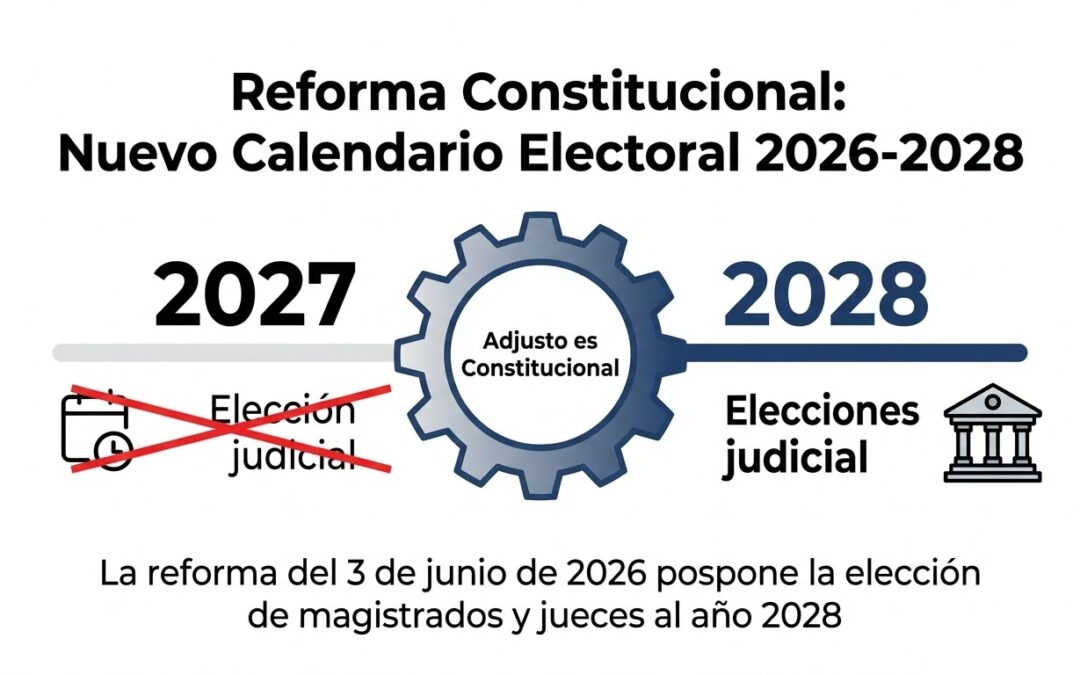
El 3 de Junio de 2026, entró en vigor La reforma constitucional que entró en vigor ayer, 3 de junio de 2026, redefine el calendario electoral y fortalece la integridad de los procesos democráticos en México. Publicada en el Diario Oficial de la Federación el 2 de junio de 2026, esta reforma constitucional junio 2026 contiene tres cambios fundamentales que afectan directamente la certeza jurídica de empresas, ciudadanos y autoridades en todo el país.
What is the Constitutional Reform of June 3, 2026?
The constitutional reform of June 2026 modifies the electoral deadlines and grounds through three separate decrees published in the evening edition of the Official Gazette of the Federation (DOF). However, the most significant change is the postponement of the judicial elections from 2027 to 2028. Therefore, the Federal Judiciary will not elect magistrates and judges in 2027, as initially planned.
Entre los cambios aprobados, destaca la incorporación de la intervención o injerencia extranjera como nueva causal de nulidad electoral, una figura que requerirá de prueba clara y contundente para sostenerse. De igual forma, la reforma a la Ley General de Instituciones y Procedimientos Electorales contempla la creación de una comisión verificadora de la probidad de los candidatos.
First Change: Postponement of the Judicial Election to 2028
Originally, the 2024 judicial reform stipulated that the election of magistrates and judges would take place in June 2027. However, this constitutional reform of June 2026 postpones that process to 2028. The reason: it allows for the consolidation of institutional changes and generates greater certainty in the federal justice system.
Este aplazamiento tiene implicaciones críticas para empresas litigantes. En consecuencia, los criterios actuales de los jueces federales se mantienen vigentes durante 18 meses adicionales. En consecuencia, los criterios actuales de los jueces federales se mantienen vigentes durante 18 meses adicionales. Asimismo, los abogados deben actualizar sus estrategias litigiosas considerando que no habrá renovación de la judicatura en 2027.
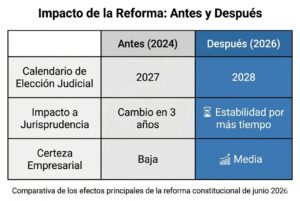
Comparison of the main effects of the constitutional reform of June 2026
Second Change: New Ground for Electoral Nullity — Foreign Intervention
Furthermore, the constitutional reform incorporates proven foreign intervention or interference in the electoral process as grounds for electoral annulment. This new provision responds to international concerns regarding the integrity of the vote. It is important to note that the National Electoral Institute (INE) must prove the causal link between the interference and the electoral outcome.
Las implicaciones para empresas transnacionales son claras: están prohibidas de participar en financiamientos electorales, aun indirectamente. Un caso claro ocurre cuando las aportaciones a organizaciones terminan financiando campañas, lo cual puede constituir injerencia extranjera. En consecuencia, el cumplimiento normativo electoral es más exigente que antes.
⚖️ Do you have questions about this topic? The lawyers at Baráibar & Asociados in Mexico City can guide you. Schedule your consultation today.
Third Change: Candidate Integrity Verification Commission
Con la llegada de un órgano especializado en vigilar la probidad de los candidatos, las investigaciones sobre los aspirantes se centrarán únicamente en sus registros fiscales, penales y administrativos. No obstante, al tener competencias limitadas, la potestad definitiva para invalidar una postulación se mantendrá bajo la jurisdicción del INE.
Cuando hay socios o accionistas que aspiran a cargos públicos el impacto para empresas es significativos. En primer lugar, sus antecedentes serán escrutados públicamente. Además, cualquier incumplimiento fiscal o administrativo puede impactar sus capacidades políticas.
Evaluation of the Current Legal Context
The Mexican Bar Association (BMA) issued a critical statement on June 2, warning that these reforms do not correct the structural problems stemming from the 2024 judicial reform. In fact, postponing the judicial election generates additional economic uncertainty.
Dentro del sector empresarial se tiene la inquietud se ha hecho evidente ante la continuidad de juzgadores con posturas consideradas de alto riesgo. A esto se suma el impacto del nuevo requisito de probidad electoral sobre los candidatos del ámbito corporativo, una medida que limita la pluralidad de perfiles en las boletas electorales.
However, experts consulted point out that the postponement to 2028 allows the new institutions created by the 2024 reform to consolidate. Therefore, the measure is pragmatic, albeit temporary.
📋 Don't face this process alone. At Baráibar & Asociados, we have specialists in Constitutional Law ready to defend your interests in Mexico City.
Immediate Obligations for Businesses and Citizens
In addition to complying with the new electoral regulations, companies must audit their relationships with candidates and political parties. It is important to note that any contribution, even indirect, can be classified as foreign interference if it involves foreign entities.
Los ciudadanos deben entender que el nuevo estándar de probidad electoral es más riguroso. No obstante, las garantías del debido proceso se mantienen; de igual manera, las decisiones de la comisión verificadora pueden impugnarse ante los órganos electorales correspondientes.
In conclusion, the constitutional reform of June 2026 is not a radical change, but it does represent significant adjustments. Therefore, expert advice is more valuable than ever to navigate this new legal landscape.
Regulatory Sources and Legal Reference
🔗 EXTERNAL LINK: Official Gazette of the Federation – Amendments of June 2, 2026 → https://dof.gob.mx
🔗 EXTERNAL LINK: Suprema Corte de Justicia de la Nación – Información sobre Reforma Judicial → https://www.scjn.gob.mx
🔗 EXTERNAL LINK: Barra Mexicana Colegio de Abogados – Comunicado de Posición → https://www.bma.org.mx
Frequently Asked Questions (FAQs)
- Does the constitutional reform of June 2026 affect active litigation processes?
No, no afecta procedimientos vigentes, solo modifica el calendario electoral. Sin embargo, el aplazamiento de la elección judicial mantiene los criterios interpretativos actuales por más tiempo. Por ello, la jurisprudencia existente sigue siendo vinculante hasta 2028. Los litigios en curso se resuelven conforme a las normas aplicables al momento de promover la acción.
- What are the penalties for proven foreign election interference?
Aunque el texto de la reforma no especifica un catálogo de sanciones, estas se remitirán directamente a lo establecido en el Código Penal Electoral. Asimismo, se contempla la posibilidad de declarar la nulidad de los comicios donde se determine injerencia, con la condición de que la prueba sea inequívoca y se acredite ante el INE.
- What does ‘probity’ mean in the context of the verification commission?
Probity means moral integrity and rectitude in the exercise of public functions. The commission verifies criminal, administrative, and tax records. It also investigates declared conflicts of interest. However, the standards of ‘probity’ vary according to the electoral body's interpretation.
- Can the decisions of the probity verification commission be challenged?
Yes. Candidates may file administrative appeals and electoral litigation. However, the procedure must be completed before the candidate registration period closes. Likewise, the burden of proof rests with the party challenging the commission's decision.
- Are the eligibility requirements for candidates changing?
Not in a formal sense. The age, nationality, and residency requirements remain the same. However, the new integrity filter adds a de facto requirement: no serious criminal, administrative, or tax record. Therefore, access to candidacies becomes more selective.
- Until when will the postponement of the judicial election to 2028 be valid?
The postponement is enshrined in the reform and can only be modified through a new constitutional amendment. Similarly, it would require approval in both houses of Congress and 50% of state legislatures. Therefore, it is virtually irreversible within the current presidential term.
Protect your rights with expert legal advice from Baráibar & Asociados. Contact us in Mexico City for a tailored constitutional strategy.
Disclaimer
This article is for informational purposes only and does not constitute formal legal advice or establish an attorney-client relationship. Legislative changes can be interpreted in multiple ways depending on specific contexts. Always consult with a qualified attorney before making decisions based on these regulations.